The month has come to an end. The month is done.
Check the restaurant’s bank account.
The number doesn’t match what you expected.
Restaurant owners may be frustrated by this as they believe cash flow and profits should be exactly the same. They don’t add up. The P&L is a measure of financial performance. On the other hand, the bank account is a record of the time when money flows in and out.
Understanding the different aspects can allow owners to change their perspective on restaurant finances.
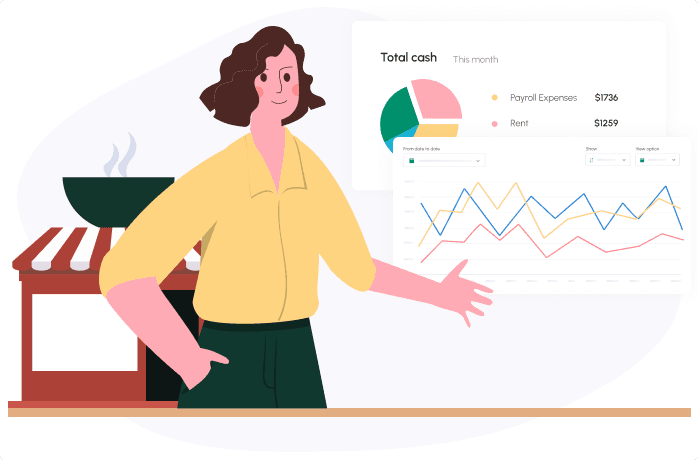
Imagine what might happen during an average week. Customers pay for meals. Employers must be paid. Food and beverages are delivered with invoices. Rent is due. The time of credit card transactions is different. Sales tax is collected, however that money comes with an obligation.
Already the next week’s purchases have begun.
If you are only looking at revenues or the final profits, you’ll miss a lot of this process.
The Clue May Be Hiding in the Prime Cost
If the profitability of restaurants begins to decrease, costs of food, beverages and labor costs must be taken into the equation.
Cost of goods sold combined with labor is the prime cost. The bookkeeping chef’s guideline places primary costs between 60%-65 percent for a variety of restaurants and emphasizes monitoring on a weekly basis instead of staying until the end of the month.
It is crucial to be able detect changes early than obsessing about the exact percentage.
Imagine that the restaurant’s results are typically within a certain range, but this past week, it was higher. Perhaps the overtime rate also increased. Perhaps the cost of beverages was stable while food costs grew. A higher proportion of food might prompt the operator to examine buying, waste management portions and menus, or even vendor invoices.
The percentage raises the question. The answer is found in the restaurant’s activity.
Weekly reports allow this conversation to be held even though everyone is aware of what has happened.
The details are harder to recall the next day or two.
When the vendor bills arrive
Restaurants may buy ingredients this week, but then pay for them in the future. This is a reason for understanding profit alone doesn’t answer all cash questions.
Invoices from vendors need to be tracked, accepted and paid. This is lots of work for the case of a business with numerous suppliers.
Automating the accounts payable process can streamline this process through reducing the repetition of bills and payments. The owner can get an accurate picture of payments that haven’t been deposited into their bank accounts by utilizing connected bookkeeping systems.
It’s useful because, viewed as a whole, the balance of a restaurant’s bank account may appear to be healthier than its actual financial situation.
There is currently $80,000 on the account. This number could mean something different if rent, payroll and vendors obligations consume a significant part of it in the next several days.
That leads naturally to cash flow forecasting.
What will happen with the money we have received after we’ve received the amount we’ve hoped for and met all of our obligations?
It is important to know the difference between them when deciding whether this week is an ideal moment to upgrade equipment, purchase additional items, or conserve the cash flow.
The cash you received may Not Be Yours
Sales tax illustrates the point particularly well.
Restaurants get money from customers, which they have to follow in accordance with the tax requirements. If these cash-flows are placed in the same category as operating cash, it can provide a false perception of the cash available for spending.
Regularly maintained records allow restaurants to comply with sales taxes and provide the managers a clear picture of their financial situation.
It’s for this reason that restaurant accounting works better when financial responsibilities don’t are separated from other responsibilities.
Prime cost affects margin. Vendor purchases impact COGS and future payments. Cash and labor percentage are affected by payroll. Sales tax influences cash availability. The P&L documents financial performance forecasting can help management look ahead.
The pieces are interconnected.
Bookkeeping Chef uses restaurant-focused reporting and system integrations to help connect the pieces. Bookkeeping outsourcing can be beneficial to operators who do not want to be tasked with reconciling their financial information.
The last point is important.
Restaurant owners shouldn’t be able to stop studying the literature just because they are handled by another. Owners should be provided with the information they need in a format which helps them comprehend what’s going on.
So when the P&L reports that the restaurant earned cash, yet the bank account is feeling a little unbalanced, don’t think that some of the figures must be wrong.
Find out what transpired between them.
The answer to this question will reveal more about the restaurant’s reputation than an identifying number.